Anthropology: Archaeology B.A., 2019
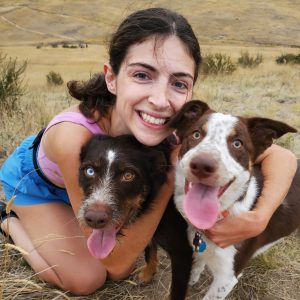
Madeline Duplechain (nee Kunkel) wasn’t picturing a career in emergency response management when she graduated with an Anthropology BA and Archaeology concentration in 2019. Emergency managers are focused on the here and now; archaeologists are more preoccupied with the past.
But natural disasters and large-scale accidents — from wildfires and landslides to oil spills and vehicle accidents — can often threaten or harm cultural resources requiring both rapid and long-term attention and action to protect or recover materials or monuments that can be destroyed in seconds. While much of the effort of incident management teams focuses on alleviating the impacts and consequences to human lives and property, cultural resource managers, such as Duplechain, bring expertise to identify and safeguard sites and materials that represent or encompass generations and centuries of communities and cultures’ history and heritage.
Since leaving CSU, Duplechain has worked in both government and consulting positions in both physical and administrative spaces to protect cultural resources from the last — and the next — major incident. In this critical corner of land and emergency management, she is an archaeologist collaborating with emergency technicians, firefighters, and utility crews.
“Who knew that a career in archaeology involved so many power lines!” she quipped.
Duplechain, now based in Boise, Idaho, shared about her work and how her experiences at CSU shaped her pathway.
What have you done for work since graduation?
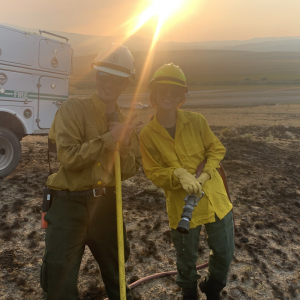
Six years post graduation, I find myself working as an Assistant Project Manager – Cultural Resources for an environmental consulting company out of California. I’ve carved out a niche in emergency resource management, first by working on wildfires for the Forest Service as a resource advisor on their incident management teams, and now by supporting a power company’s emergency utility restoration efforts.
My current position requires me to work in tandem with construction crews, agency representatives, and other relevant stakeholders to ensure the proper treatment of cultural resources following natural and man-made disasters of varying scales. Wildfires, landslides, car accidents, oil spills, floods, the works! I’ve been in my current position for almost four years and have really enjoyed working in the utilities sector. Who knew that a career in archaeology involved so many power lines!
Do you see increasing opportunities for archaeologists and people with anthropology knowledge in emergency management and response?
So, long story short: yes! Emergency work is a growing opportunity for archaeologists within both the public and private sectors.

How did your archaeology education at CSU influence your career path?
I participated in the 2018 CSU Archaeology Field School, taught by Dr. Jason LaBelle. The experience was highly influential and reshaped how I viewed college. I walked away from that summer with a firm understanding of how college was preparing me for a career, rather than serving as a “coming of age” experience. It made me a lot more deliberate with how I spent my time!
Through the mentorship of both Dr. LaBelle and Paul Buckner (an M.A. student who assisted in the school), I got my first job in archaeology between my junior and senior years, as a seasonal field technician with the USFS in eastern Oregon.
I walked away from the Archaeology Field School with a firm understanding of how college was preparing me for a career, rather than serving as a “coming of age” experience.
You also worked in the Archaeological Repository as a student. What did you take away from that experience that has stuck with you?
I completed a practicum [for credit] in the repository. My job duties consisted of cataloguing boxes and boxes of artifacts that had been stored at CSU since the 1970s. The lack of provenience data for each box has stuck with me since, making me a real stickler for quality field notes and organization!
What advice do you have for current students?
I highly recommend working as a seasonal archaeologist with the Forest Service as your first position, and doing so while you’re still in school. It’s a great way to have a little adventure, get some work experience, and come back in the fall with a clearer understanding of what you need to take away from class. Not to mention, it gives you an head start on your resume.
Additionally, I recommend getting as involved as you can with your coursework and professors – their guidance is invaluable. I also recommend having a backup plan/side hustle for when the field season is slow, in case you’re not able to swing year round employment in CRM. I worked as a nanny for a winter while in between jobs. Shovel bumming was hard in that way – I’m grateful for the consistency of a full time position now.
I encourage those who are interested in disaster response and management to seek out opportunities with FEMA, the Bureau of Land Management, and the Forest Service to get your shoe in the door. Pursuing a season or two as part of a fire crew — not doing archaeology — could also prove beneficial in the long run. If I could go back in time, I would have done a season of wildland firefighting while in college. It’s a good way to gain experience, cool memories, and make some money.
On this same train of thought, don’t think that you need to have a master’s degree to have a full-time position. I was able to land one just two years out of school, and my team frequently hires folks full time with even less experience than that.
Things seem to be looking up in terms of supplying newer arch’s with full-time, benefited jobs!
What do you do when you’re not working?
While my projects are in California, I live in Boise, Idaho with my husband, whom I met while working for the USFS, and two dogs! I’m currently enrolled at Adams State University, slowly chipping away at an M.A. in Cultural Resource Management. In my free time I like to knit — something I was taught by a fellow CSU student — and run and hike.