Department History

Celebrating 50 years as a department and an even longer history on campus!


In 2025-26, CSU Anthropology and Geography is recognizing our 50th year as a stand-alone unit as well as the earliest days of our disciplines on campus. Our department timeline spans more than five decades of anthropology and geography, embracing our past achievements and setting the course for our future legacies!

Come celebrate with us in December 2025 for our 50th Anniversary reception on CSU campus (Details and registration link coming soon!)

Join dozens of alumni and contribute to our Culture of Giving campaign to support student scholarships and success! Launching soon!

Many thanks to Vicky Lopez-Terrill, Librarian Specialist, and CSU Libraries Archives and Special Collections for their help with this project, plus faculty, alumni, and other contributors to department photo collections.

logo of gold circle with green text reads 50th Anniversary 1975-2025 Anthropology and Geography Colorado State University

Beginnings

Sociology course listings from Colorado State University Biennial, 1959-61.
Sociology course listings, including Cultural Anthropology (S.5), from Colorado State University Biennial, 1959-61.

First Steps

Sociology professor Joe Sardo teaches the first course in anthropology at Colorado State University in 1959-60. (Introduction to) Cultural Anthropology is offered as a Sociology class within the Department of Economics and Sociology in the College of Science & Arts. 

According to the CSU Biennial, the class is: "A survey of cultural anthropology. The nature of culture, of culture patterns, and of cultural change. The relation of culture to the individual. The content of cultures; language, subsistence, economic structure, social groupings, government, art, mythology, and religion in primitive societies." The course is still offered as ANTH 100 today.

Donald E. Crim becomes the first full-time anthropology faculty in 1963, as a member of the Sociology and Anthropology staff in Department of Economics and Sociology, based in the Old Main Building. Crim would teach a wide range of cultural anthropology subjects, including theory, ethnomusicology, and language and culture, and introduced courses in archaeology and physical anthropology.  

Growth Spurt

Anthropology faculty increased steadily through the 1960s. David McCurdy is hired as cultural anthropology faculty in 1964 but leaves within a few years for another position.

In 1965, C. Thomas Shay becomes the first CSU archaeology faculty member, and Russell W. Coberly becomes the third cultural anthropology faculty. That fall, CSU offers 13 anthropology courses with a strong cultural focus.

Theodora Kreps is hired as faculty for 1966 becoming the first woman instructor in the department. Robert J. Theodoratus begins as faculty in Fall 1966, taking position left by McCurdy. J. Stanley Rhine is hired at the first physical (now called biological) anthropology faculty in 1968, specializing in osteology, human evolution, and primate behavior.

Anthropology faculty are involved in planning for the new Social Sciences Building, to open in 1967. Shay proposes a pollen-analysis facility as part of an archaeology laboratory.


black and white photo of campus buildings and plaza
The Social Sciences Building, later renamed the Andrew G. Clark Building, in 1969.

Early Years

black and white image of students digging at grid unit
Excavation at Lightning Hill, on Roberts Ranch near Livermore, Colo., during an early 1970s Archaeology Field School. Photo courtesy Jason LaBelle/ CSU Archaeological Repository.

Digging In

James Judge is hired as archaeology faculty in 1968 after Shay departs. The following summer, Judge leads a summer field program at Fort Vasquez, considered the first CSU Archaeology Field School. Judge directs the field school again the next summer at Roberts Ranch in northern Larimer County, establishing a relationship between faculty and the landowners that lasts decades and supports dozens of research projects and many return visits by field schools and classes.

Esther J. Pressel is hired as cultural anthropology faculty in 1968 after Kreps departs. Pressel develops courses across ethnographic teaching on Africa and African-derived cultures of the Caribbean and the Americas as well as psychological anthropology and, later, medical anthropology.

The Writing on the Wall


Theodoratus is named the Director of the Anthropology Division within the Sociology Department. The college dean acknowledges "soaring enrollments" and increasing budgets and supports calls for a separate department.

Anthropology faculty move into the new Social Sciences (to be named Clark in 1977) Building and get access to their own classroom and lab space, separate from Sociology faculty who remain in the Old Main Building.

Painted bison, resembling cave art from Altimira Cave in Spain, appear in the new Clark B hallway, the work of anthropology and arts students. Despite disapproval from some faculty, administrators, and facilities staff, students and other professors advocate for keeping and refreshing the art for years to come.

image from historical newspapers. Text reads Collegian May 8, 1969: “This product of an unknown artist was found on the second floor of the Social Science Building’s C-wing. The “bison,” a re-creation of a 10 to 12,000 year old painting in the Altamira Caves of Northern Spain, appeared after College Days in the hall outside the Anthropology Department’s offices. (“Collegian” photo by “Buffalo” Bob Nelson). Collegian April 7, 1970: “Every generation has to have its cave drawings. Actually, a coed puts some finishing touches on a mural depicting the extinct bison. The wall painting can be viewed in B-wing of the Social Science Building. (“Collegian” photo by Bill Lane).”
A bison painted in the style of the cave art in Alitmira Cave in Spain from 1969, with inset image of student re-illustrating bison in 1970. Images courtesy CSU Libraries Archives.

Age of Change

Upright and Outward

Elizabeth Ann Morris is hired as faculty of archaeology in 1971 after Judge moves on. Morris, daughter of famed archaeologists Earl and Ann Axtell Morris, establishes the Archaeology Field School as an annual summer program. Morris holds nearly all field schools within an hour’s drive of Fort Collins, knowing many of her students had spouses, apartments, pets, and night jobs.

Michael Charney, age 60 at the time, is hired as faculy in Fall 1971 specializing in forensic anthropology, after Rhine leaves. Charney soon becomes CSU's most prominent and public anthropologist because of his work with forensics and human identification.

Other new instructors are hired to teach primatology and Native American studies in the early 70s, beginning an important relationship with adjunct instructors and teaching professors.

Calvin H. Jennings is hired for a new faculty position in archaeology in 1972 and begins the Laboratory of Public Archaeology (LOPA). Jennings and the lab take on government contracts to conduct cultural resources surveys on public lands before mining and development projects in compliance with federal laws, employing dozens of students across the years. Jennings also co-directs the Archaeology Field School from 1973-79.


Image from circa 1970s of students sifting dirt at field site with professor watching and dog jumping.
Elizabeth Ann Morris (far left) looks on as students sift excavated dirt during a field school session, circa 1972.
Front page of the Rocky Mountain Collegian, September 28, 1971, with headline, "American Indians protest anthro studies" and balck and white image of Native American touching objects on desk.
Front page of the Rocky Mountain Collegian, September 28, 1971, with headline, "American Indians protest anthro studies." Image courtesy CSU Libraries Archives.

Awakening: Protest in the Lab

On September 27, 1971, American Indian Movement (AIM) protesters storm into the Physical Anthropology lab (today's Clark C249 "Bone Lab") and issue a “citizens arrest” warrant for Morris for allegedly “body snatching” human remains during the field school program the previous summer. Vernon Bellecourt, AIM Director in Denver, demands CSU return all Native American remains held on campus and agree to stop removing remains from grave sites encountered during field projects.

The episode represents a clash of past practices and perspectives with emerging modern values and ethics. 


Dawn of a Department

Welcome to the Department of Anthropology

By 1974, CSU Anthropology faculty has grown to nine members and on the verge of being recognized as their own department. After more than a decade of steady expansion, the faculty numbers will hold steady for the following two decades.

After a Master of Arts in Sociology and Anthropology was introduced in 1971, a separate Master of Arts in Anthropology is created in 1974 as administrators continue to discuss "departmentalization." 

Theodoratus is awarded sabbatical leave in 1974, the first time for an anthropology faculty at CSU. Coberly serves as acting director during the absence. 

Coberly and other faculty support the establishment and help lead the interdisciplinary Certificate in Latin American Studies program.

With support from the college dean and already having separate space from Sociology faculty, the Department of Anthropology is recognized and established and begins operating as a separate unit in Fall 1975.


Screengrab image of Rocky Mountain Collegian, March 4, 1974, with text headline reads Momentum builds for Anthropology Department split.
Article in the Rocky Mountain Collegian, March 4, 1974, with headline, "Momentum builds for Anthropology department split." (Image via CSU Libraries Archives)
Professor in lab looking at shelf of skull casts, circa 1970s
Dr. Michael Charney in his lab, the former Potting Shed, with shelves of skulls and casts. Undated photo. (Image via CSU Libraries Archives.)

Wading Into Forensics

Charney retires from the department in 1976 but continues to teach on campus. After the catastrophic Big Thompson Flood killed 144 people in July 1976, Charney and the Center for Human Identification plays a central role with the county coroner to assist with identification of casualties. in the aftermath, the retired Charney forms the Forensic Science (Human Identification) Lab, affiliated with the biology department, in 1979.

Jeffrey L. Eighmy is hired as Archaeology faculty in 1977, introducing a specialization and groundbreaking research with archaeomagnetism, a method of chronometric archaeological dating to the department and students.

The School of Humanities & Social Science becomes the College of Arts, Humanities, & Social Sciences in 1977.

Coming of Age

Looking to the Future

At the close of the 1970s, there are more than 50 Anthropology majors and 25 graduate students enrolled with the department, and nearly 1,000 students take Introduction to Anthropology each year. More than 35 alumni have received an Anthropology master's degree during the previous decade.

"The message of anthropology is that there is strength in cultural diversity, that more heads can solve more problems, and that the problems of the future are so complex and enormous that the whole of human experience will be of potential significance in their solution," Morris writes in the 1979 CSU annual report.

Foreshadowing a later merger, in 1982-83, faculty meet to discuss combining Anthropology and Geography faculty but do not move forward with a proposal.

Eighmy and faculty and students re-establish a Friday Afternoon Club in Fall 1983.

Morris retires from CSU in 1988.


Archaeology Field School students excavating at the Kinney Spring site, under the direction of Dr. Elizabeth Ann Morris, from 1983-1985. Students tested a 1,000-year-old-house at the site, nestled in the foothills and adjacent to a permanent spring.
Student holding a pot in the Archaeology Repository
An Anthropology student holds a pot in the Archaeology Repository, which contains items collected primarily through the CSU Laboratory of Public Archaeology (LOPA), led by Calvin Jennings, as well as the CSU Archaeology Field School.

Addressing the Past

With the passage of the federal Native American Graves Protection and Repatriation Act (NAGPRA), CSU and other institutions and museums that hold Native American and Indigenous artifacts are charged to inventory their collections and return certain materials and remains to affiliated tribes. The law initiates off a decade-plus long effort to review and repatriate holdings.

Ann L. Magennis is hired as faculty of biological anthropology in 1991. 

Lawrence C. Todd is hired as faculty of archaeology in 1992, with Coberly retiring.

The College of Arts, Humanities, & Social Sciences is renamed the College of Liberal Arts in 1992.

Eighmy is named department chair in 1993.

A New Generation

A Cast of Scholars

As original Anthropology faculty retire -- Crim in 1995; Theodoratus in 1998; Pressel in 2002; and Eighmy in 2003 -- a wave of new professors arrive at CSU to explore exciting frontiers in anthropology research and public engagement.

Kate Browne is hired as faculty in 1994. She will develop and lead courses across public and applied anthropology and risk management and specialize in Afro-Caribbean and Creole cultures.

Kathleen Galvin (ANTH B.A. 1971, M.A. 1979) is hired as faculty in 1994, with a focus on biocultural anthropology and ecology. She is the first CSU Anthropology graduate to return as faculty.

Kathleen Pickering is hired as faculty in 1997 and establishes an annual Summer Ethnographic Field School at Pine Ridge, Rosebud, and Cheyenne River Indian Reservations in South Dakota, beginning in 1998. Program runs annually (except 2000) through 2012.

Mary Van Buren is hired as faculty in archaeology in 1999. She focuses on Andean and historical archaeology.

Jeffrey Snodgrass is hired as faculty in cultural anthropology in 1999, specializing in psychological anthropology and cultural research methods. 

Michelle (Mica) Glantz is hired as faculty in biological anthropology in 2000. Glantz studies and teaches about early humans and hominins, including Neandertal diet.

Galvin becomes the new department chair in 2002. 

Lynn Kwiatkowski is hired as faculty of cultural anthropology in 2003.

Professor talking to a TV crew at a field site
Professor Mica Glantz (left) talking to a TV crew during a field research program in Kazakhstan with students and other faculty in 2013.
Students in the 2014 Ethnographic Field School at the Pine Ridge Reservation.
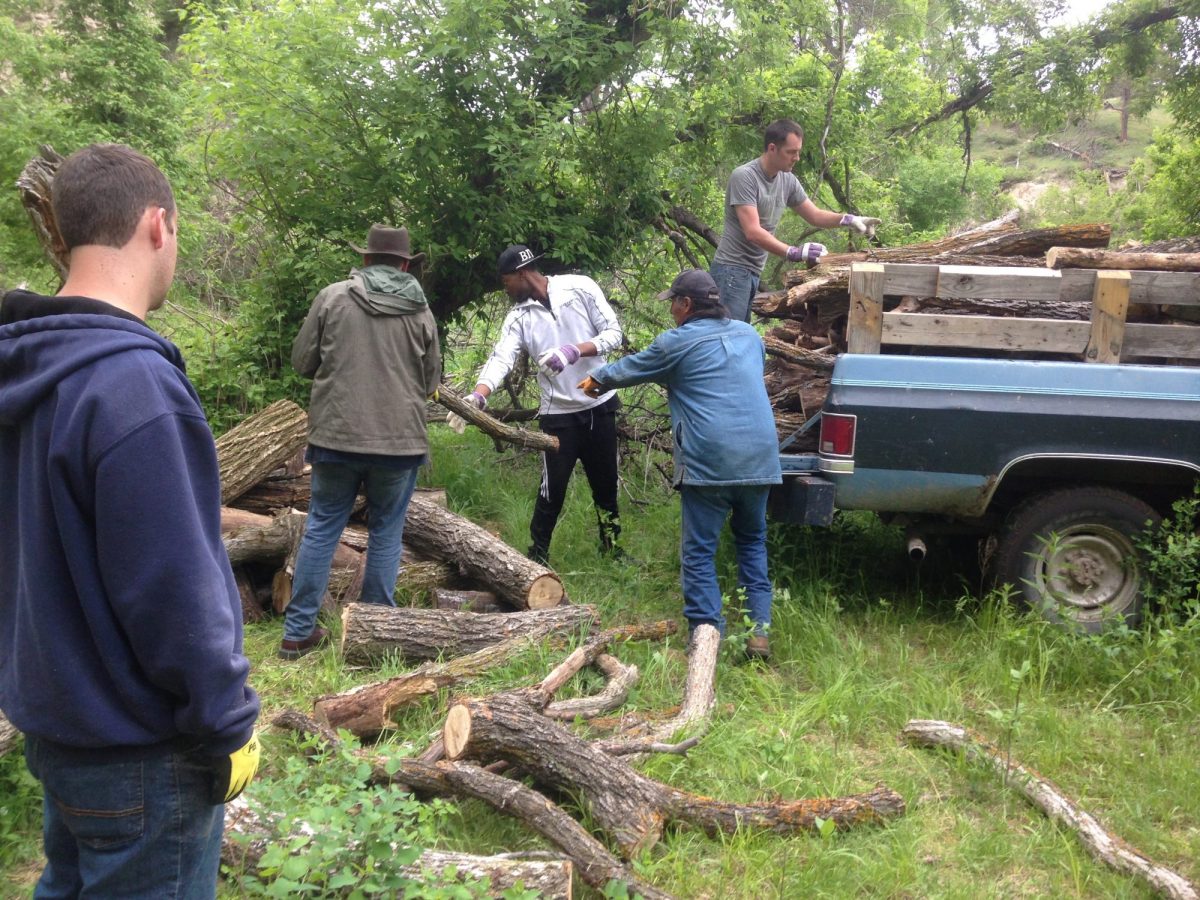
Students helping clear cut logs during the 2014 Ethnographic Field School at the Pine Ridge Reservation, South Dakota. Kathleen Pickering led field schools at Pine Ridge and other reservations for nearly 15 years.

Impacts Beyond Campus

In 2002, Magennis and the department accept the request to take custody of a collection of remains and materials of former patients from the grounds of the Colorado State Mental Hospital in Pueblo.

Chris Fisher is hired as faculty focusing on Mesoamerican archaeology and, eventually, remote sensing in 2002.

Jason LaBelle (ANTH B.A. 1995) is hired as faculty, with a concentration on Rocky Mountain and Great Plains archaeology in 2005. LaBelle takes over as director of the Archaeology Field School and the LOPA collections and, later, the CSU Archaeological Repository.

In 2005, Magennis and LaBelle launch a heightened effort on behalf of the department to complete inventory and consultation for NAGPRA.

Jennings retires in 2005.

The Anthropology Graduate Student Society is established in 2006 and publishes the first volume of Furthering Perspectives: Anthropological Perspectives on the World, a peer-reviewed journal edited by graduate students in 2007. The journal remains active.

As a contributor to the Intergovernmental Panel on Climate Change, Galvin and others are awarded the 2007 Nobel Peace Prize.

Browne co-produces a film documentary, “Still Waiting: Life After Katrina,” about families and communities in the aftermath of Hurricane Katrina, in 2007.

Reaching New Territories

Remapping a Department

CSU Anthropology adds two geography professors in 2008, marking an evolutionary moment for the department.

Stephen Leisz is hired as faculty of environmental geography.  Under Leisz, the department opens the Geospatial Laboratory in Spring 2009.

Jason Sibold is hired as faculty of cultural geography. His research focuses on biogeography and understanding climate impacts on forests, insects, and wildfire regimes.

Browne produces a documentary film, Lifting the Weight of History, based on research with women entrepreneurs in Martinique, which debuts on French, American, and international TV in Summer 2008.

The department holds its first recorded kickball game in 2008.

Todd retires in 2008.

Pickering becomes new department chair in Fall 2009. A year later, a handful of emerita return to campus to celebrate the department's 35th anniversary with faculty and alumni in 2010. PIckering writes in her newsletter chair's note:  "What is now a department of 12 faculty, two staff, six adjunct instructors, 53 graduate students, 135 majors, and nearly 50 minors, began in 1963 when the Department of Sociology hired one full-time faculty member to teach that discipline." 


Student and professor taking wood core samples from cabin building
Prof. Jason Sibold (back) and student take wood cores from a cabin to analyze in the Biogeography Lab.
Student holding a pot in the Archaeology Repository
An Anthropology student holds a pot in the Archaeology Repository, which contains items collected primarily through the CSU Laboratory of Public Archaeology (LOPA), led by Calvin Jennings, as well as the CSU Archaeology Field School.
Student prospecting for fossils at the 2018 Paleontology Field School in the Bighorn Basin of Wyoming
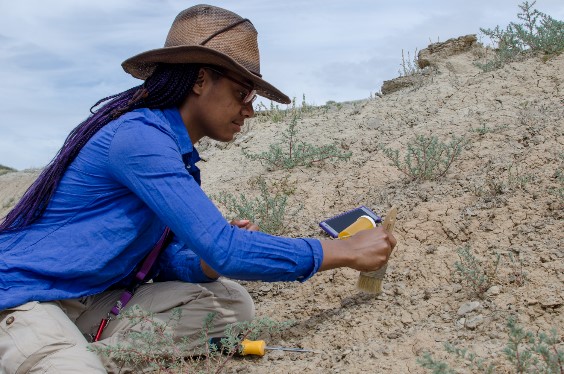
Aiesha Augustin prospecting for fossils at the 2018 Paleontology Field School in the Bighorn Basin of Wyoming, led by Dr. Thomas Bown and Kimberly Nichols

Going Global

With National Science Foundation funding, in 2010, Fisher uncovers a lost urban settlement in Mexico, last occupied around 1350 A.D. Fisher is named a National Geographic Society Explorer in 2013.

A major gift from James and Audrey Benedict. enables the establishment of the Center for Mountain and Plains Archaeology, directed by LaBelle. The center provides research and work opportunities for students.

LaBelle also creates the CSU Archaeological Repository in 2011, a federally designated space for cultural artifacts and materials, which combines holdings from LOPA, the Archaeology Field School, and other faculty and lab collections.

The department adds Anthropology B.A. concentrations in cultural anthropology, archaeology, biological anthropology, and geography in 2011. New specialized tracks for graduate degrees are created in 2012, as faculty surge ahead with plans to create a Ph.D. program.

Also, in 2011, Anthropology begins offering introductory courses through CSU Online Plus, making it one of the first Anthropology programs to develop online classes and curriculum.

In 2013, Pickering is selected to serve as Vice Provost for Undergraduate Affairs. Glantz becomes interim chair before running for a full term and serving in role until 2024.

Instructors Kim Nichols and Thomas Bown, Ph.D. lead the first CSU Paleontology Field School in Summer 2013, taking students to Wyoming's Bighorn Basin to collect and analyze 55- to 60-million-year-old vertebrate fossils. The field school remains an annual program.

Michael Pante is hired as faculty in biological anthropology in 2013.

Modern Era

Forging New Routes
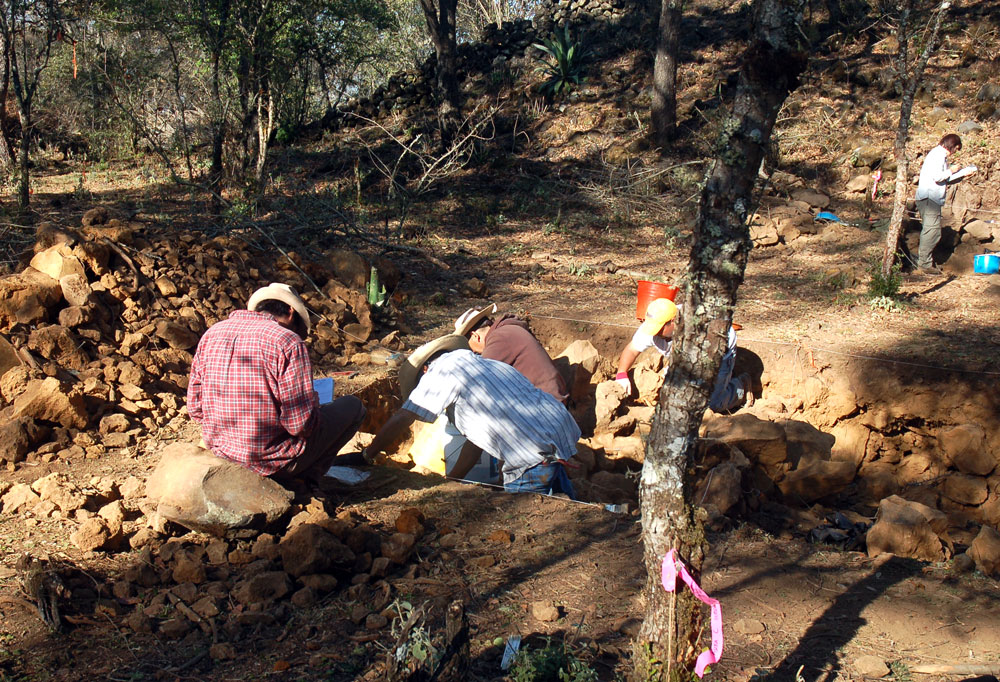
Fisher and a field team explore a valley in Mosquitia region of Honduras in 2015, uncovering and excavating a “lost city” garnering news coverage in National Geographic, The New Yorker, and other media. Fisher's project is chronicled in Douglas Preston’s book, The Lost City of the Monkey God: A True Story, in 2017.

Browne publishes Standing in the Need: Culture, Comfort, and Coming Home after Katrina in 2015.

Merrill Johnson, initially hired as an administrator with CSU INTO, joins department as faculty of geography.

Glantz and LaBelle participate in two reburials, led by Terry Knight of the Ute Mountain Tribe and others, to re-inter the remains of individuals once held at CSU. Repatriation ceremonies are held in Boulder and Saguache counties. Within a few years, the department completes consultation on all currently known materials from repository collections, returning individuals to culturally affiliated tribal nations.

Pickering and Magennis retire in 2017.

After years of planning, the department launches an Anthropology Ph.D. program with a unique focus on Space, Place, and Adaptation in Fall 2018.

CSU’s first Geography bachelor of science program opens in 2018. A year later, the department expands its name to include Anthropology – and Geography. 

Two professors laughing on a stage during book release party
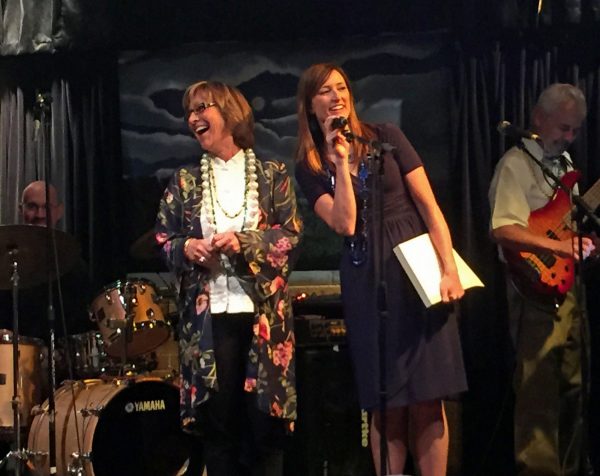
Kate Browne and research collaborator Lori Peek at the book launch for Standing in the Need in 2015.
Group standign outdoors for posed photo during ceremony
Representatives from several Native American nations, staff from History Colorado, Colorado Department of Natural Resources, and Colorado Commission of Indian Affairs, and Anthropology and Geography Professor Jason LaBelle (top row, second from left) and Chair Mica Glantz (top row, third from left) gathered at a 2016 Native American reinternment, supported by a NAGPRA grant. (Photo: History Colorado)
group photo of faculty and students at 2020 Archaeology Field School with CSU president - group is dispersed for COVID compliance
Archaeology Field School students and (foreground, left to right) Professor Mary Van Buren, Associate Prof. Edward Henry, and CSU President Joyce McConnell during Summer 2020 and the COVID-19 pandemic.
Three men standing in front of monument with two large sculptures of primate skulls found at site.
Doctoral candidate Alex Pelissero, Chair and Professor Michael Pante, and doctoral student Tewabe Negash Kessaw at Olduvai Gorge, Tanzania, Summer 2024. (Image courtesy Pante.)

Adapting to New Conditions

New programs bring new faculty and research.

Adrienne Cohen is hired as faculty of cultural anthropology in 2018. Cohen publishes a book, Infinite Repertoire: On Dance and Urban Possibility in Postsocialist Guinea in 2021.

Heidi Hausermann is hired as faculty in geography in 2018. She leaves in 2024.

Edward Henry is hired as faculty in archaeology in 2018. He co-leads the Archaeology Field School on alternating summers, taking students to study and digitally map mound-building cultures at sites in Tennessee and Missouri.

The American Anthropological Association honors Browne with the Franz Boas Award for Exemplary Service to Anthropology at its annual meeting in 2018. A year later, Browne is named University Distinguished Professor, the highest academic recognition from CSU. She leads the first (and only) Ethnographic Field School in Risk and Disaster, bringing students to the Texas Gulf Coast in Summer 2019 to interview residents of Rockport, Texas, who endured and survived the 2017 landfall impact of Hurricane Harvey.

Andrew Du is hired as faculty of biological anthropology in 2019.

The undergraduate Museum & Cultural Heritage Studies certificate launches in Fall 2020.

COVID-19 closes CSU campus (and the rest of the world) in March 2020 moving classes online through spring and setting off a period of innovation and adaptation. The Summer 2020 Archaeology Field School, led by Henry and Van Buren, runs on campus -- with masks, temperature checks, and distancing rules -- uncovering the site of the "claim shanty" that helped establish CSU in Fort Collins in the 1870s. Classes resume masked and online through 2020-21.

Here and Now

Carrie Chennault is hired as faculty of geography in 2021.

Browne retires in 2021.

Galvin is named University Distinguished Professor in 2022.

Snodgrass publishes his book, The Avatar Faculty: Ecstatic Transformations in Religion and Video Games, in 2023.

In 2023, department faculty move out of Clark A-wing labs and Clark B-wing offices and spaces ahead of Clark Building revitalization. Most people move into interim and shared spaces in the General Services Building as well as the Lake Street building and Natural and Environmental Science Building. Department spaces in Clark are projected to reopen beginning in 2026.

Jonna Yarrington is hired as faculty in cultural anthropology in 2023.

Pante becomes new department chair following an 11-year period of leadership by Glantz. 

Van Buren publishes a book, Silver “Thieves," Tin Barons, and Conquistadors: Small-Scale Mineral Production in Southern Bolivia in 2024.

Johnson retires in 2024. 

New hires in 2024-25 include Jacob Petersen-Perlman, faculty of geography; Michaela Howells, faculty of cultural anthropology; and Landon Yarrington, faculty of cultural anthropology.

Kelton Meyer and Zoey Walder-Hoge defend their doctoral dissertations in Spring 2025, becoming the first Anthropology Ph.D.s from Colorado State University.  

A new Forensic Anthropology minor starts in Fall 2025.

Group of faculty and adminstrators at event for university distinguished professors
Professor Kathleen Galvin (third from left) at the 2022 University Distinguished Professors reception, with Anthropology Prof. Lynn Kwiatkowski, Anthropology and Geography Prof. and Chair Mica Glantz, Associate Professor of Anthropology Michael Pante, CSU President Joyce McConnell, Prof. Emeritus of Anthropology Kate Browne, and College of Liberal Arts Dean Ben Withers
Image show professor, PhD graduate and graduate's father standing outside. Professor and graduate in balck regalia and caps and graduate holds green diploma case
Professor Jason LaBelle, Ph.D. graduate Kelton Meyer, and Meyer's father at the 2025 Ph.D. Commencement ceremony, May 2025.

Sources: Recollections by Coberly, department newsletters and bulletins, CLA Magazines and website, RM Collegian and Silver Spruce archives, ARCHIVES I SEARCHED USE OFFICIAL NAME

News button

Alumni button

Give button

Research Listings button