Anthropology B.A., 1976
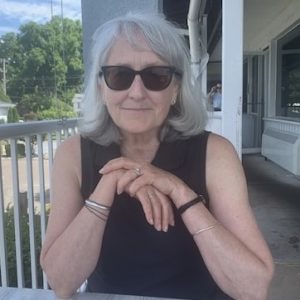
Marilyn Baker Quinn built a remarkable career in higher education and public administration, shaping policies and programs that supported thousands of students and families.
Her strategy for a rewarding career?
Although I did not work directly in anthropology, my approach to my work was shaped by what I learned in CSU Anthropology,” Quinn said. “It especially led me to ask the right questions in the program development and research areas I worked with.”
Quinn (ANTH B.A. 1976) credits her anthropology education at Colorado State University for giving her a unique perspective, knowledge, and skills that helped her gain meaningful jobs and deliver results. For more than 25 years, she served at the Delaware Higher Education Commission, ultimately as Executive Director. During her tenure, she oversaw statewide data reporting and managed more than 30 student assistance programs, including grants, scholarships, and college savings. She also earned a master’s degree in public policy at the University of Delaware. In 2002, she returned to Colorado, working with CollegeInvest and the state Department of Labor, and making time to volunteer with Historic Denver.
Now retired, Quinn recently decided to establish the Baker Family Scholarship, an endowed fund specifically for CSU Anthropology and Geography students and a tribute to the discipline that opened her world. The fund will provide scholarships open to all department students, providing an important avenue
Quinn reflects on how anthropology shaped her worldview and professional life and inspired her decision to give back — while sharing memories of CSU life in the 1960s and ’70s.
You’re originally from Colorado?
I was born and raised in Eads, Colorado, an agricultural community with a population of about 1,200. Most residents are involved in cattle ranching and winter wheat farming. My father was a small businessman, and my mother was the Eads Postmaster. I graduated from Eads High School in 1966 and am still in touch with my classmates and former neighbors!
In spite of its relative isolation on the high plains, Eads was a great place to grow up, with an appreciation of education and music, and a wonderful sense of community. I remember when I was about 10 years old, a fossilized Wooly Mammoth was discovered at a nearby farm and we all went out to watch the dig. On a less happy note, the Sand Creek Massacre site is only 12 miles from Eads, but an important historical and cultural site [now protected by the National Park Service].
What was it like coming from rural Colorado to a university campus in the mid 1960s? How did you end up choosing anthropology?
My adjustment to college life was significant and included a transfer from the University of Denver to Colorado State University after my freshman year. I changed majors at least once, but when I took my first Anthropology class I found my place. Anthropology exposed me to a world I could not have imagined and provided a framework for understanding it.
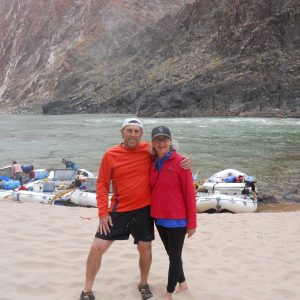
Part of my education was travel. In the ’60s and ’70s, many American students dropped out to explore the world, and so did I. Anthropology students sometimes justified these excursions as “fieldwork!” Partially because of this fieldwork, my graduation was delayed until 1976, but those ten years were a very rich and rewarding period in my life.
Another part of my education was work. Being outside the usual 4-year degree plan involved working to pay for most of my education. At CSU, I worked in the College of Veterinary Medicine and the College of Natural Sciences, both of which added dimensions to my life that I would not have been exposed to otherwise.
Anthropology exposed me to a world I could not have imagined and provided a framework for understanding it.
Any specific memories or stories from favorite classes or campus life?
Oh, boy! I remember I watched Old Main burn [in 1970]. That was sobering and scary. And I remember the anti-war demonstrations and the first military draft lottery.
There was Friday night beer and food with faculty and students at Dr. Don Crum’s!
I remember Dr. Robert Theodoratus’ dissertation was only about six pages long because of the genius of a chart that summarized his research. Dr. Russ Coberly was my advisor, whose patience was truly amazing.
My wonderful roommates and I are friends to this day! I’ve been fortunate in life to have met many kind, generous people.
What skills and knowledge from your anthropology and liberal-arts education have been most useful or important to you through your career?
Although it was not my goal upon graduation, my career has been in state government and higher education.
I have used the research and writing skills I learned as an Anthropology major throughout my career in public administration. I was never employed as an anthropologist, but I felt my educational background made me more sensitive to the perspectives of communities, clients and co-workers that I worked with over the years.
As a volunteer in historic preservation, these skills were especially relevant. I led successful efforts to create three historic districts in northwest Denver (Allen M. Ghost, Packard’s Hill, and the Tilden School) and to prevent destruction of important historic properties, including the Bosler House and Beth Eden Church. I was awarded the Molly Brown Award by Historic Denver.
I knew I wanted the fund to be specifically for Anthropology students because anthropology opened the world for me and especially at CSU because it was such a rich and welcoming home.
How did your college experience and your work influence your decision to establish the Baker Quinn Scholarship?
I believe in the value of higher education and hope that, in some small way, this new scholarship will encourage students to make the most of their Anthropology studies.
In my career as a financial aid program manager, I could see how great the need for student financial assistance is. Although I’m not wealthy, I am fortunate to be in a position to share some of my resources with future students.
Ultimately, I knew I wanted the fund to be specifically for Anthropology students because anthropology opened the world for me and especially at CSU because it was such a rich and welcoming home. I also wanted to do this now because I feel liberal arts have recently become somewhat undervalued compared with fields that are usually more financially rewarding, such as finance, business, accounting and marketing, and yet they add balance in our society.
I hope this gift will go a little way to showing my gratitude, and that it will make at least a small difference to future students.