Anthropology M.A., 1976, B.A., 1972
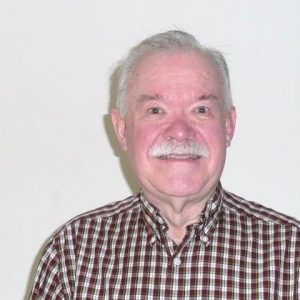
Terry Haynes (ANTH BA 1972, MA 1976) grew up in rural eastern Colorado and arrived at CSU in the late 1960s. Away from home for the first time, Haynes was overwhelmed — Fort Collins was the big city for a kid from Haxtun, population 990 — and he quickly lost his academic scholarship. Haynes took a job at Aqua Tech to make money for another attempt at college. A coworker told him to take an Anthropology class when he went back – it would be easy.
“I took (Introduction to Cultural Anthropology) with Professor Esther Pressel, we read one book a week, and I thought, ‘This isn’t easy. But it is interesting.’” Haynes was drawn to learning about and understanding other cultures and decided on anthropology as his major.
Now retired after a long career in conservation and cultural heritage in Alaska, Haynes speaks about how anthropology, his education at CSU, and an influential funded research opportunity led him into a rewarding career – even if wasn’t a direct pathway.
“Most of my career, none of it was planned,” Haynes said, “but I say anthropology can open the door.”
“No Illusions”
Before Haynes could become an Anthropology major, he had to meet with Dr. Robert Theodoratus, director of the Anthropology division within the Department of Sociology. The bushy-eyed professor asked Haynes why he wanted to be an anthropologist. “He said, there are not a lot of jobs and they don’t pay well. I told him, I just like studying cultures. He nodded and told me, OK, but ‘Don’t have any illusions.’”
Once Haynes got into the field, his interest in cultures — and applied anthropology — only grew. As an undergraduate field assistant working with faculty Jack Schultz, Haynes traveled to the Wind River Indian Reservation in Wyoming to do ethnographic research, collecting information about medical services and family-planning needs. He also later worked with fellow students Rod Frey and Madeline Rippe on the Crow Indian Reservation in Montana, part of Schultz’s first field school program. (Schultz led a field school on the Ute Mountain Ute reservation in southwestern Colorado in following summers, too.) Along the way, Haynes began to recognize the impact applied anthropology could bring to people’s lives and well-being as well as the value of intercultural exchanges and communications.
“I really enjoyed learning about the cultures on the reservations in the 1970s,” recalls Haynes. “There was a lot of tension [as Anglo researchers working between cultures] but I felt like if we can learn and help present their perspectives, we could provide benefits.”
Haynes completed his Anthropology B.A. in 1972 and stayed on at CSU for his master’s degree, just as the graduate program was getting established.
“We were really such a small department but with a pretty impressive record of student achievement,” Haynes said. “I TA’d for Don Crim [the first full-time CSU anthropology faculty member] one quarter. Don was a fantastic and very personable guy. The first day of class, he’d take a picture of every student and then he just knew everybody’s name. Every year he’d have a pig roast and he made some home-brewed beer that was just deadly! Everyone looked forward to it.”
North Star
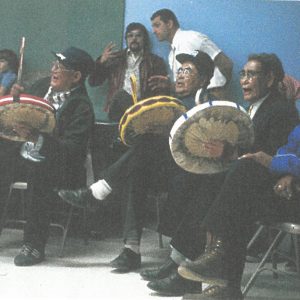
Haynes built on his earlier fieldwork from the Wind River Indian Reservation for his master’s thesis. When classmate Nancy Higgins encouraged him to apply for an internship after graduation that would get him to Alaska Native communities, he hesitated to consider doing research in Alaska and had never flown farther than Albuquerque.
But Haynes realized the paid internship was a chance to work with under-served populations and to lead ethnographic research just as he was starting a doctoral program at University of California, San Francisco. The experience extended across four years, including one winter, collecting oral histories and conducting needs assessments among the Dene people and other Indigenous communities around the Fairbanks region and the Upper Tanana River valley. His doctoral dissertation examined the social support systems of Dene and non-Natives in several communities in the upper Tanana region.
“I just fell in love with the area and the people,” Haynes says, “and just wanted to keep working there.”
His skills and knowledge led the Alaska Department of Fish and Game to recruit him to apply to join the Division of Subsistence and, later, Division of Wildlife Conservation. Across a decades-long career, Haynes’ research and relationships helped determine and set rules to protect and preserve Indigenous hunting and fishing activities across Alaska. His legacy in the region persists: Land and resource managers and historians still cite and refer to his oral histories, images, and research papers in current plans and reports dedicated to preserving cultural and natural heritage. Haynes’ work and photography were widely featured in fellow anthropologist William E. Simeone’s 2023 history book, The Upper Tanana Dene: People of this Land.
Endowing Research
Around the time Haynes was concluding his professional career in Alaska, then department Chair Kathleen Galvin reached out to him – the two are former CSU grad-school classmates – about the need for graduate research funding.
“We realized there aren’t a lot of scholarships for this type of anthropology research for graduate students,” Haynes says. “I said, I’ll make a contribution on one condition. We get as many alumni as we can to contribute.”
Haynes’ initial leadership gift launched the Anthropology Scholarship Endowment in 2008 and a campaign drawing in contributions from alumni and other donors helped the fund reach its target to open a few years later. In recent years, the Endowment has supported three to five students’ fieldwork and writing each year.
Haynes remains a steadfast supporter of the Endowment, graduate research, and enabling students to seek research and applied opportunities to demonstrate the value of anthropology. He also enjoys meeting with students and sharing his insight and journey.
“I always encourage students, Don’t worry about being called an anthropologist,” Haynes says. “You can do anthropology at so many jobs.”
####
Learn more about the Anthropology Scholarship Endowment.
Give to CSU Anthropology and Geography